
Mobile App Development for iOS and Android
We design, build and release native iOS and Android apps together with the server side they run on. One team takes the product from written requirements to the App Store and Google Play, and stays for updates after launch.
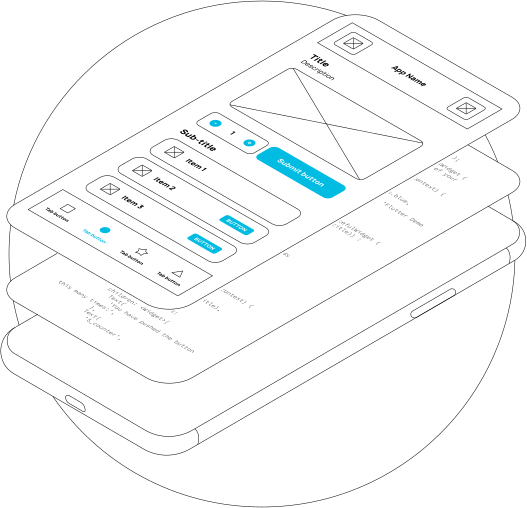
When native mobile development is the right call
Native apps cost more than one shared codebase. They pay off when the app is the product itself, or when it relies on what the phone can do.
- You are launching a product where the mobile app is the main way customers use the service
- The app depends on the camera, geolocation, background work, payments or push notifications
- You need audio or video calls, real-time chat or media playback that stays smooth on older phones
- The app handles sensitive data such as medical records or money and needs careful authorisation and storage
- You have a hybrid app on outdated technology that has become slow and hard to update
- Your web platform needs a mobile client for customers or for staff on the move
What we do
Requirements and estimate
We go through the idea with you and describe screens, user roles and integrations. You get a written scope and an estimate in time and money before development starts.
UX/UI design
User flows, wireframes and a clickable prototype, then final design for every screen and state, including empty, loading and error. The design follows Apple and Google guidelines, so the app feels at home on each platform.
iOS and Android development
Swift for iOS and Kotlin for Android, with Objective-C and Java when an existing codebase needs them. Work goes in sprints, and each one ends with a build you can install and try.
Backend and API
When the product needs its own server side, we build it in the same project: API, database, admin panel, notifications and payments. PHP (Laravel, Yii2), Python or Ruby on Rails, chosen for the task.
QA on real devices
Testing runs alongside development, not only at the end. We check the app on real iPhones and Android phones with different screen sizes and OS versions, and against store review guidelines.
Store release and support
We prepare builds, store listings and screenshots, go through App Store and Google Play review and fix what reviewers ask for. After launch we update the app for new OS versions and keep adding features.
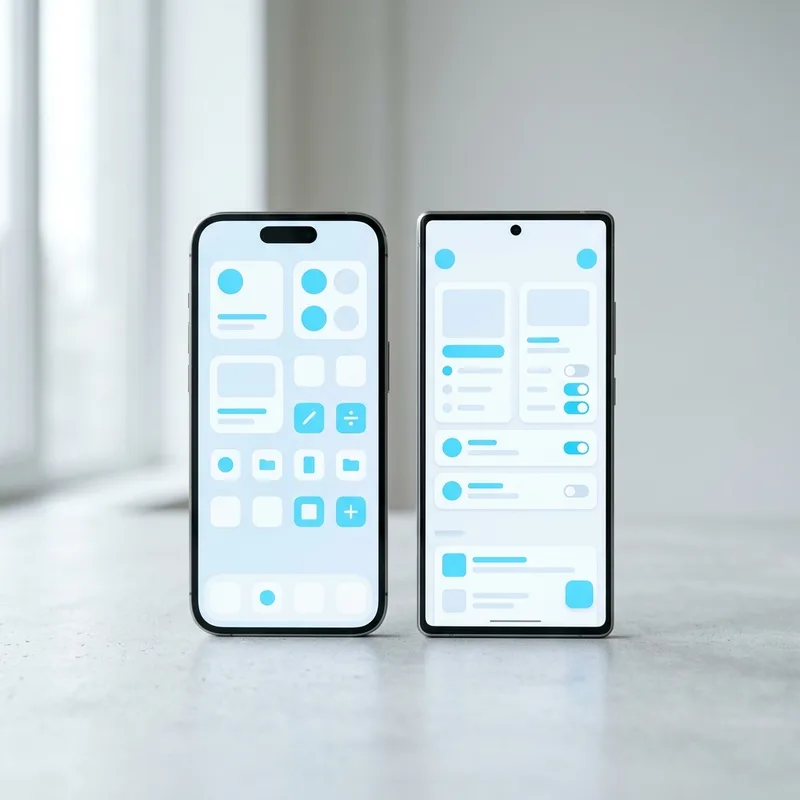
Native or cross-platform: you get a recommendation before the estimate
A native app is written separately for each platform: Swift for iOS, Kotlin for Android. That costs more than a single React Native codebase, and it is not always necessary. Native is the right choice when the product depends on the camera, geolocation, background tasks, payments or push notifications, which the platforms open to native code first and to cross-platform frameworks later. Performance also holds up as the feature set grows. If your app is mostly content, lists and forms, we will tell you that cross-platform development is enough and save you the second codebase.
- A written recommendation, native or cross-platform, with the reasons, before you commit a budget
- Full access to camera, location, background tasks, payments and notifications
- Navigation and behaviour that iOS and Android users already know from other apps
- Fewer surprises during App Store and Google Play review
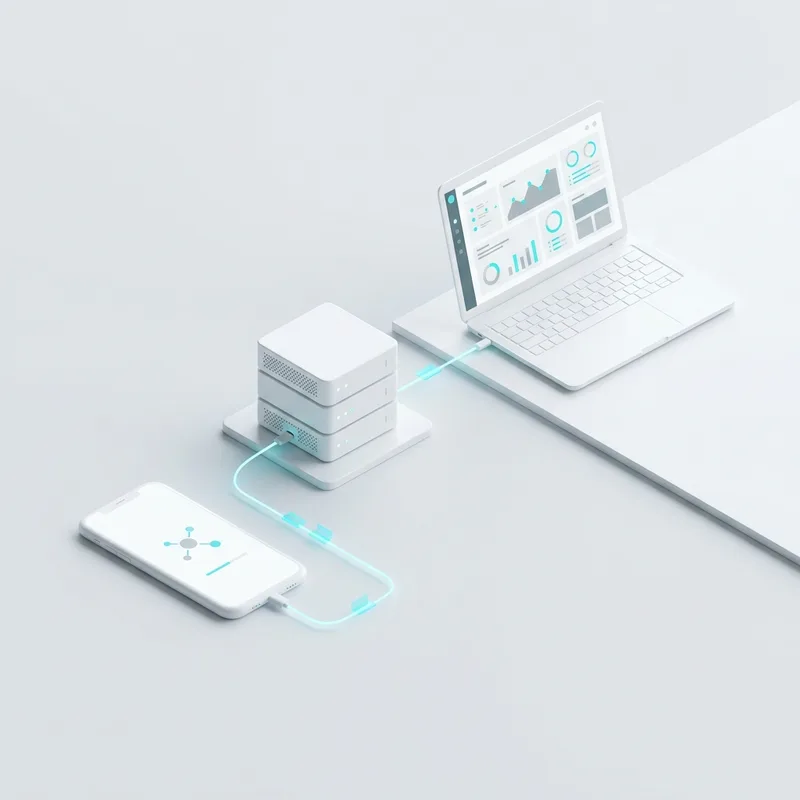
More than the app: server side, admin panel, integrations
Most mobile products are only half an app. Behind the screens there is a server that keeps accounts and data, sends notifications, takes payments and gives your team an admin panel for content and users. We build that part in the same project, so the app and the API are designed together and one team is responsible when something breaks. For Stellium Music App we built iOS and Android clients with a Laravel backend and a Vue.js web part; Fashion Wallet, a wallet for exchanging cryptocurrency and fiat, has the same combination of native clients and a Laravel server side.
- API and database designed together with the app screens
- Admin panel for your team: content, users, orders, reports
- Payments, push notifications, email and analytics connected
- Integrations with your CRM, ERP or existing web platform
- API documentation, so another team or a web client can use it later

You own the code, the accounts and the product
The source code, the repository and the App Store Connect and Google Play Console accounts belong to you from the start. We work in your repository or hand it over with the release, together with build instructions and access to every service the app uses. If you later move development in-house or to another team, nothing has to be rebuilt. It works the other way too: if somebody else wrote your app, we read the code, tell you what state it is in and continue from there, or say honestly that a rewrite will cost less than keeping it alive.
- Source code and repository in your ownership
- Developer accounts in both stores registered to your company
- Build and release instructions, API documentation and a list of third-party services
- An honest assessment before we take over an app built by another team
How a mobile project runs
Discovery and estimate
We clarify goals, users, screens and integrations. You get a written scope, a native or cross-platform recommendation and an estimate in time and money.
Design
Wireframes, a clickable prototype and final UI for all key screens. You approve how the app looks and behaves before development starts.
Development in sprints
Each sprint ends with a build you can install on your own phone. You follow progress in the app itself, not in status reports.
Testing
QA checks every feature as it is built and runs a full regression before release. You get a build tested on real devices and OS versions.
Store release
We prepare builds and listings, submit to the App Store and Google Play and handle review feedback. The app goes live under your developer accounts.
Support after launch
Updates for new iOS and Android versions, crash monitoring, fixes and new features. You decide whether support continues or the project ends at release.
Technologies
iOS
- Swift
- Objective-C
Android
- Kotlin
- Java
Backend and API
- PHP (Laravel, Yii2)
- Python
- Ruby on Rails
- MySQL
Admin panels and web
- Vue.js
- JavaScript
- HTML5
- CSS3
How we can work together
Fixed scope
Scope, estimate and timeline agreed in writing before development. Suits a first release or an MVP with clear requirements; if the scope changes, the estimate is revised openly.
Dedicated team
Developers, a designer and QA who work on your product continuously and follow your priorities. Suits apps that are already live and growing.
Hourly
You pay for the hours actually spent, with regular reports. Suits smaller improvements, audits of existing apps and work that is hard to scope in advance.
Reviews
We treat each client and his project with love.

Revol team continues to streamline the client’s development capabilities through their high-quality work and reliable support. They communicate effectively and exhibit a strong understanding of the client’s needs and business.
Tomas


The work from Revol, have fully met expectations and satisfied the client. Their fresh approach and ability to remain available for support have been valuable assets. Customers can bring them on for a communicative, client-oriented team to achieve their goals with.
Andrey
Frequently asked questions
How long does it take to build a mobile app?
It depends on the scope, and an honest answer comes after we have gone through the requirements with you. An app with its own backend, user accounts and payments is a different amount of work from a single-screen utility. We give an estimate before the start, and if the scope changes during development, the estimate changes with it rather than silently.
How is the price calculated?
From the scope. We break the app into screens and features, estimate each one in hours and add design, backend, QA and release work. You can then work on a fixed scope, with a dedicated team or by the hour. We do not publish prices, because two apps with the same number of screens can differ a lot in effort.
Should we build native or cross-platform?
Native if the app depends on device features, heavy graphics or background work, or if performance is critical. Cross-platform with React Native if the app is built around content, lists, forms and network requests and one codebase is enough. We give a recommendation with reasons before the estimate.
Do we get the source code and the store accounts?
Yes. The code, the repository and the store accounts belong to you. We do not keep products hostage, and if you later move development in-house or to another team, nothing has to be rebuilt.
Can you take over an app somebody else wrote?
Usually yes. We start by reading the code and the build process, then tell you what condition the app is in and what the first months of work will involve. If the product needs a rewrite rather than support, we say so before taking the work.
What happens after the app is released?
Apple and Google release new OS versions every year, and store requirements change with them. We update the app, monitor crashes, fix bugs and add features. Support can continue after release or the project can end there; the details are on our mobile app support page.
Tell us about your project
Describe the task in a few lines. Within one working day we reply with questions or a first view on scope and cost.
Prefer email or a call?
welcome@revolsource.com
+38 097 662 23 20
Revol Software OÜ, Tallinn, Estonia. Our team is distributed around the world.
Join our team
Send your CV to career@revolsource.com