



E-commerce development for retailers

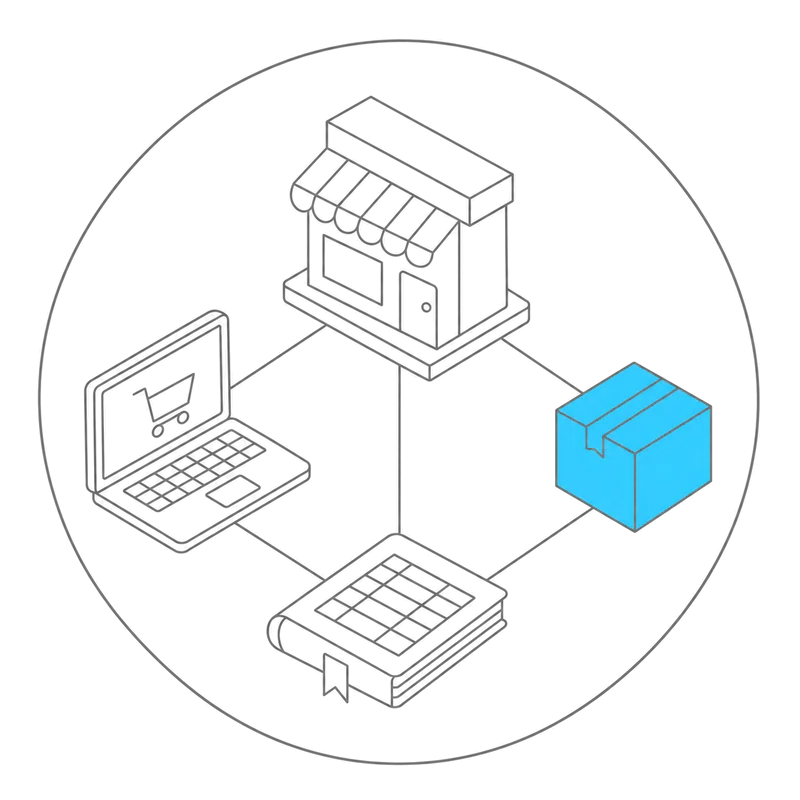
You sell in shops and online, and your stock lives in an accounting system. We build and support online stores that take products, sizes, stock and prices from that system, so nobody copies the catalogue by hand. For wholesale customers we build ordering in Telegram, with a CRM for your sales team.

Ask AI about Revol Source:ChatGPTClaudePerplexity
E-commerce development for retailers

When this fits

Most problems in a retail store start where the website and the accounting system disagree. These are the ones we hear most often.

What we build for retailers

Sync with accounting

Products, sizes, stock per size and prices come from your warehouse and accounting system. In a fashion boutique we support, the store updates about once an hour.

Physical shops and online stock

The website reads stock from the same system that tracks your physical shops. A sold-out model hides itself and comes back when it is restocked.

Prices and promotions

A lower price in accounting turns into a crossed-out price and a discount badge on the site. Managers fill seasonal promotions such as Black Friday from the admin panel.

B2B ordering in Telegram

A Telegram Mini App where shops and dealers browse the catalogue and order, and a web CRM where your managers handle those orders.

Speed on large catalogues

Cache layers, a move to a dedicated server, images in WebP. In a designer eyewear store, cached pages now answer in about 0.3 s instead of 3.7 s.

Search visibility

Category and brand texts, an FAQ page and product markup. In one day of fixes a fashion boutique’s SEO audit score went from 43 to 79.

Stock and prices from the system that owns them

Stock and prices from the system that owns them

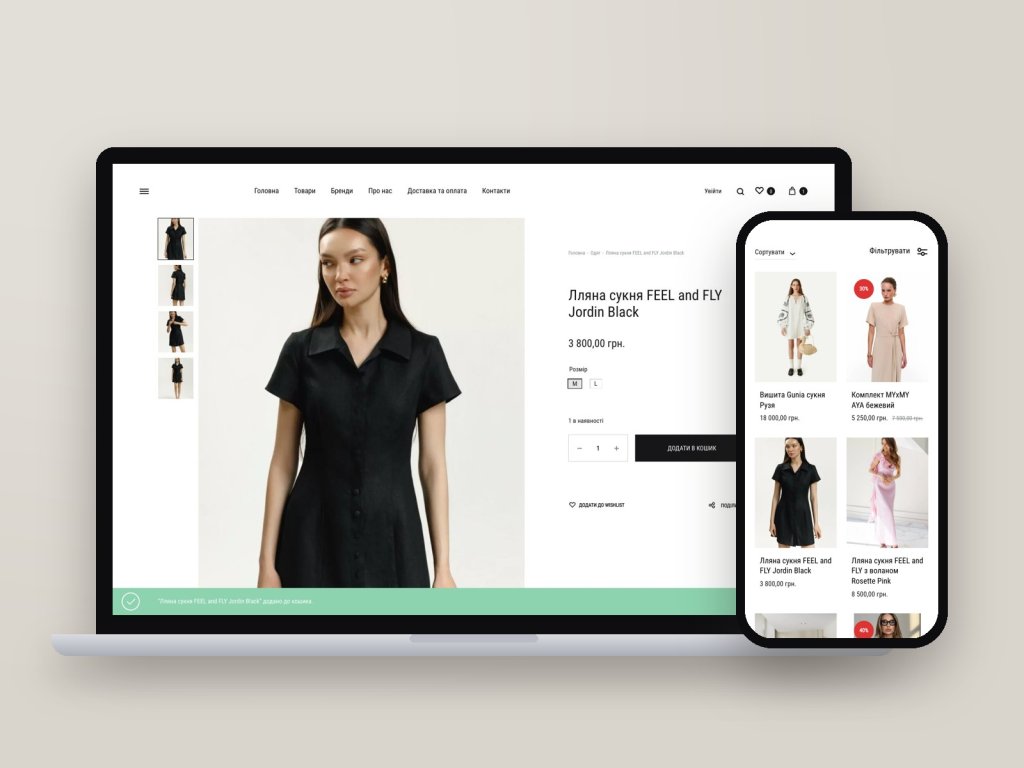
A designer eyewear store with about 4,300 products from around 50 brands and a multi-brand fashion boutique with about 4,300 product cards from around 60 brands both keep their range in a warehouse and accounting system that also tracks their physical shops. Both online stores take goods, stock and prices from it, and we built that link from scratch and keep it running: the eyewear store since 2023, the boutique since 2024. In the boutique, goods, sizes, stock per size and prices refresh about once an hour, and a size that has sold out cannot be ordered. In the eyewear store a discount set in accounting appears on the site and in the SALE section without anyone touching the website.

Octolab: a retail store and wholesale ordering on the same data

Octolab: a retail store and wholesale ordering on the same data

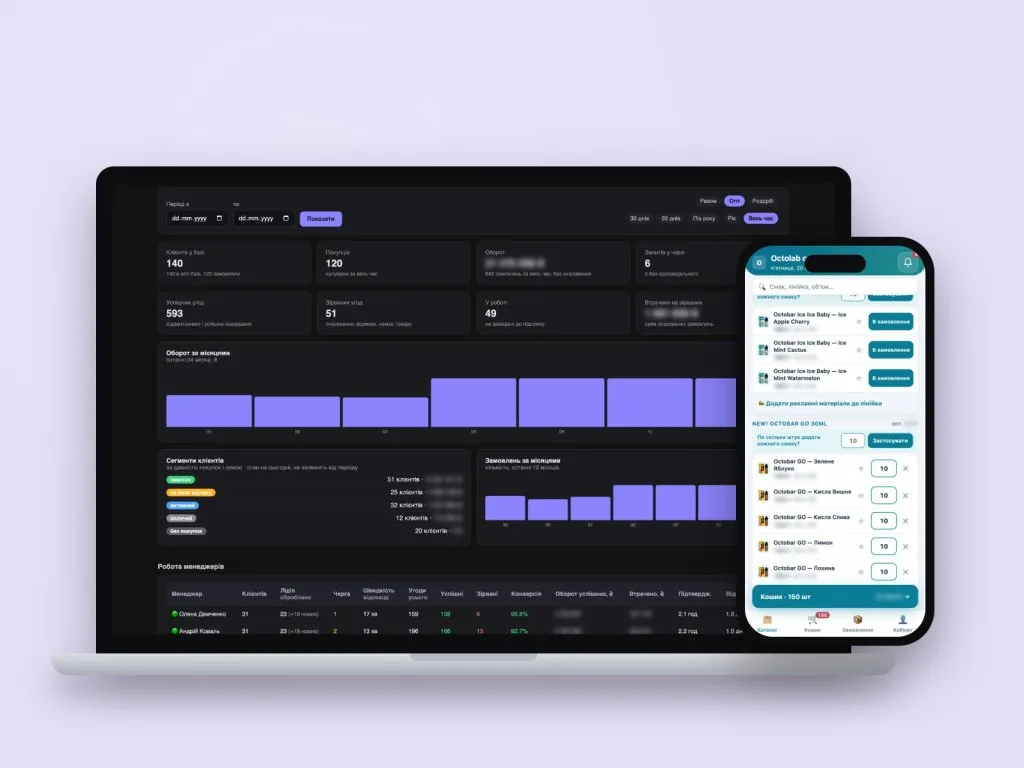
Octolab is a flavourings manufacturer that keeps its catalogue in an accounting system. We built its brand site and online store in three languages, with about 200 products synced from accounting, and every web order goes into the accounting system without retyping. The store opened to the public in November 2026. For wholesale we built a Telegram Mini App where shops and dealers browse the catalogue and order, plus a web CRM for managers and the owner. The pilot with real wholesale customers ran in August 2026, and the app replaced the CRM the company used before for wholesale orders.

Fast pages on a catalogue of thousands

Fast pages on a catalogue of thousands

A slow store usually has a few causes you can measure: an overloaded server, missing cache layers and product pages full of heavy images. In the eyewear store, after a move to a dedicated server and a second cache layer, the server answers cached pages in about 0.3 s instead of 3.7 s. In the fashion boutique, page caching brought the response from about 2 s to 0.3–0.4 s, and converting images to WebP cut a product page from about 3 MB to 1.4 MB. Unique texts for 23 categories and about 60 brands, an FAQ page and product markup raised the boutique’s SEO audit score from 43 to 79 in one day.

How a store project goes

01

Introductory call

You tell us how you sell today: shops, website, wholesale, and which system holds products and stock.

02

Store and data audit

We check the store, the server and what your accounting system can export and accept. You get a written list of what to fix and what to build.

03

Data plan

We agree which data goes where, how often it updates and what happens when the two systems disagree.

04

Build on a staging copy

Changes go to a copy of the store first, and we check catalogue, cart and checkout there before the live site.

05

Launch and support

We launch, watch the sync and the speed, and keep the store updated under monthly support.

What these stores run on

Store

Speed

B2B and integrations

Analytics

How we work together

Fixed scope

A new store, a link to your accounting system or a B2B ordering app, with scope and estimate agreed in writing.

Monthly support

Updates, backups, monitoring, sync checks and a volume of small changes every month, with a written report.

Hourly

A slow category page, a broken sync after an update or a one-off audit, paid for the hours spent.

Store on WordPress?

The platform page covers WooCommerce plugins, multilingual setups and updates in more detail. For search, the technical SEO page explains how we audit a store.

Reviews

We treat each client and their project with care.

Frequently asked questions

Can you connect our store to the accounting system we already use?

We start by checking that. Before the estimate we look at what your system can export and accept, through files or an API, and how often. Products, sizes, stock and prices then come from accounting, and the website stops being a second catalogue that someone has to keep in line.

How often do stock and prices update?

It depends on your system and the size of the catalogue. In a fashion boutique with about 4,300 product cards, goods, sizes, stock and prices refresh about once an hour. We agree the interval with you during the data plan.

We also sell in physical shops. Will online stock match the shelves?

The store reads stock from the same system that tracks your shops, so a model sold in a shop drops off the website after the next update. Sold-out models hide themselves and return when restocked, and an out-of-stock size cannot be ordered.

Do you build ordering for wholesale customers?

Yes. For Octolab we built a Telegram Mini App where shops and dealers browse the catalogue and order, with a web CRM for managers. Each order comes with a ready form in the layout the accounting system expects, so managers load it into the accounting system without retyping.

Our store is slow. Where do you start?

With measurements of the server response and page weight on real pages. In a designer eyewear store a dedicated server and a second cache layer brought cached pages from 3.7 s to about 0.3 s. In a fashion boutique, WebP images cut a product page from about 3 MB to 1.4 MB.

Do you only work with WooCommerce?

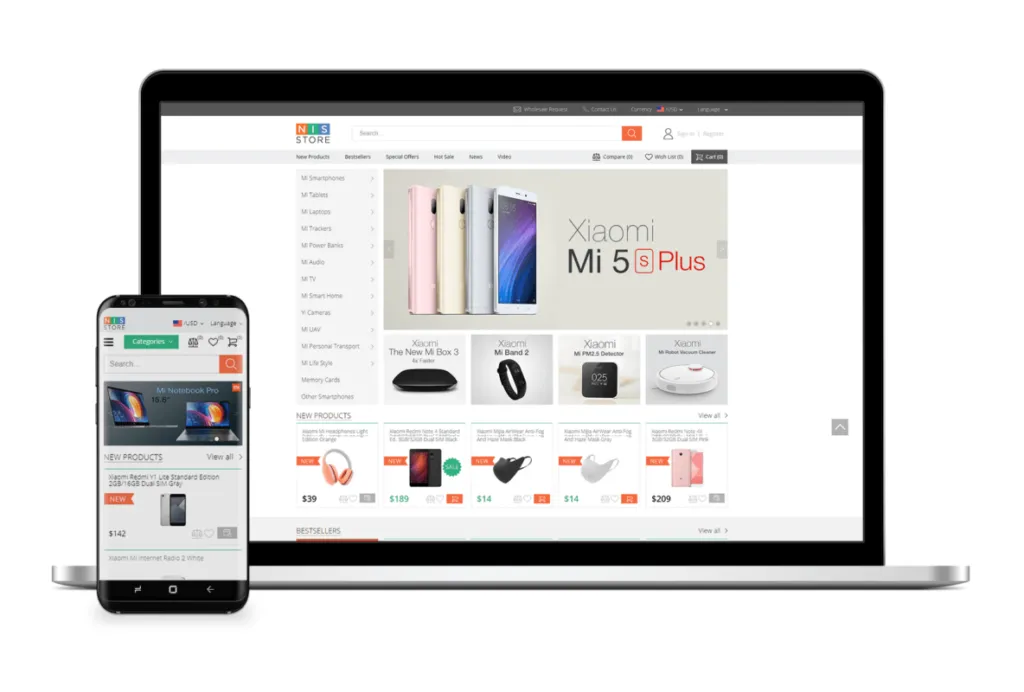
The retail stores on this page run on WordPress and WooCommerce, and the B2B ordering app runs on Python with FastAPI. For NIS-Store we built a new interface on PHP and MySQL. We suggest a platform after the audit, based on your catalogue and the systems it has to talk to.

Tell us about your project

Describe the task in a few lines. Within one working day we reply with questions or a first view on scope and cost.

Prefer email or a call?

welcome@revolsource.com
+38 097 662 23 20

Revol Software OÜ, Tallinn, Estonia. Our team is distributed around the world.

Join our team

Send your CV to career@revolsource.com